“Do you guys specifically seek out places to live that are near bodies of water,” my friend Melissa asked me as we watched the brook tumbling past the hiking trail we followed in the pouring rain. The trailhead was located across the street from my condo complex. “You always seem to find homes that are close to the water.”
Her question gave me pause, but as I thought more about our last few homes, I realized she had a point. Here, there is the brook that bisects that Mattabesset River, just a couple miles away. At our previous home, a man-built pond lay at the bottom of the hill in our yard. Before that, we were the closet to a beach that I’ve ever lived. And before that, lush flowers filled our yard, giving way to an above-ground, saltwater pool that sat unhindered beneath the sky.
I love the flash of slate blue rippling across craggy rocks. The steady, though meandering flow of moving water becomes my drishti–my point of focus and concentration as I meditate on the lessons of nature:
The river is constantly turning and bending and you never know where it’s going to go and where you’ll wind up. Following the bend in the river and staying on your own path means that you are on the right track. Don’t let anyone deter you from that.
–Eartha Kitt
The ocean–though not necessarily the beach–is one of my happy places as well. My mind is focuses and becomes hypnotized by the ebb and flow of the tide. Peace lies somewhere in the din of the thunder and roar of crashing waves.
if
the ocean
can calm itself,
so can you.
we
are both
salt water
mixed with
air.
― Nayyirah Waheed
Yet inner peace also can be found by me in the midst of the woods, beneath the protective cover of long-limbed trees and among the leafy plumage of flora. Water purifies, energizes and empowers me, while greenery centers, grounds and replenishes me. Green is quite literally sign of life–of nourishment and vibrancy. I find these things as well when I fully observe and take in the verdant landscape.
I felt my lungs inflate with the onrush of scenery— air, mountains, trees, people. I thought, ‘This is what it is to be happy.’ –Sylvia Plath
I grew up among the hills, surrounded by trees and close neighbors with the fauna. I swallowed the fresh breezes, drawing the oxygen deeply into the lungs, carrying it straight to the heart and then passing through the paper-thin walls of alveoli before slipping into my blood. Now, as an adult, when I’ve spent far too long behind the desk–breathing in the stale air of the indoors for hours on end–stepping across the threshold of front door immediately releases some of the tension. My eyes catch on a furry squirrel leaping from the trees and running across the railing of the back deck, and I regain my sense of curiosity, wonder and awe.
“As long as lush greenery is somewhere close by, I am happy,” I told my friend. “When trees are near, it feels like home.
When I was a child, I lived and breathed fiction, inventing detailed characters and complex worlds everywhere I turned. In my fiction, I was a ballerina, a mini Indiana Jones or a resistance fighter. I was an only child growing up with a single father, an orphan raising my three siblings, or I was the oldest of seven brothers and sisters with a widowed mother. I lived in the city, worked on a farm, attended elite boarding schools somewhere far from home, or traveled across invented countries in Europe in the midst of a fictitious war.
Immersing in Imaginary Lives
As a curious little girl, I soaked up my father’s fascinating stories about being one of nine children living on a tobacco farm in North Carolina in the ‘50s. His family grew their own food, and he and his siblings played sports with the fruit crops. They raised animals–from barn cats and chickens to mules and cows–as pets or as livestock. His mother cooked from scratch and regularly baked the favorite desserts of each child. And it seemed like there was always someone his age–boy or girl–with whom he could play. I liked to imagine what it would be like growing up in such a big family in the country.
My mother, on the other hand, was raised in the city as the only child of older parents. She had grown up in the unfamiliar-to-me world of classical piano recitals, debutante parties and local beauty pageants. Hearing stories about her more genteel upbringing (at least, in comparison to mine) encouraged me to fantasize about living in privilege, traveling across the country for ski vacations and attending all-girls’ boarding schools in Europe.
In real life, my parents, brothers, and I lived in the mostly white, New England suburbs during the ‘80s. I had never left the country and had only really traveled down south. Yet, I knew from my favorite novels, movies and National Geographic magazines that there were billions of people out there who lived a reality completely unfamiliar to me, in wholly different environments and raised within richly diverse cultures. I loved to fantasize what it would be like to be born into different families in faraway states or exotic countries.
A Girly Girl in A Tomboy World
Growing up with two older brothers, I was widely exposed to the world of boys–climbing trees, going fishing, playing video games and breakdancing. I was a soccer player and gymnast who had more speed, strength and power than the dexterity, balance and elegance possessed by my ballet-dancing or horse-riding characters. Thus, I enjoyed creating protagonists with traits and strengths that were opposite of my own. What–I wondered–might it be like to be a girly girl?
In truth, I got a kick out of watching the WWF Superstars of Wrestling and kung fu films on Saturdays with my brothers, and I enjoyed creating lively scenes with my M.A.S.K. action figures. Yet, I also really loved playing dress-up and re-enacting the dancing, love scenes of favorite films–like The Sound of Music and Dirty Dancing–with my Barbies. Of course, my best, girl friends were happy to play dolls with me when they visited, but they unfortunately didn’t live with me, like my brothers did. While the boys occasionally indulged me in a make-believe session or two, their hearts were never in it as much as I wished; when they entered adolescence, they stopped playing along all together.
My Cabbage Patch Kids were my surrogate children, but I had to invent sisters through the characters I crafted. In my stories, I had a multitude of female siblings–both older ones whom I could ask proper girly questions and younger ones who pestered me for attention because they admired and looked up to me. Sisterhood remains one of the most explored and fascinating territories of my fiction writing to this day.
The childhood wistfulness for sisters perhaps stemmed partly from instinctively sensing that I did, in fact, have those other sibling connections out there somewhere. It was confirmed in early adulthood that I had both an older and younger sister (and brothers), children my father had with women other than my mom. While I knew of the older sister from a very young age, I didn’t understand the concept of having a sibling who lived several states away and whom I’d never met until my early teens. She couldn’t teach me how to properly put on make up or to effortlessly flirt with adolescent boys. So for most of my youth, my distant sister was less real to me than Beezus, the older sister of Ramona in Beverly Cleary’s classic children’s series. While I knew from books and from friends that older sisters could be just as bothersome as having brothers sometimes was, I also observed that they were a key resource for navigating that tempestuous– and sometimes, downright terrible–terrain of female adolescence.
This would have been especially helpful to me, as I was, to quote the fierce songstress Ani DiFranco “the only whatever I am in the room,” with regard to ethnicity, at least. No one else had my skin color or hair or my physique. Make-up colors that looked great on my friends made me look like a clown. The clothing styles that suited wide hips and flat butts did not favor my round but and muscular thighs.
And my hair? Don’t get me started. I was known for my signature braided pigtails until fifth grade, when I announced to my mother that I now wanted to wear my hair down, like all the other girls. Oh, the humiliation I put my poofy locks through trying to mimic the swooping hairstyles of my fellow, female classmates. I had an ‘old school’ mother from the South who would administer straightening perms for me and roll my hair up in curlers so that it would, after an hour under a salon hood dryer, lie smooth. However, it was never bone straight, and it always had the big bounce of the hairdos my mom favored that were popular in the 60s and captured so perfectly in the film Shag. I figured if I had had an older sister, she would have experimented on her own hair enough to discover what flattered ‘girls like us’; and if not, at least we would be riding in the same, outlier boat together.
The Girls from Shag–Melaina, Carson, Pudge and Luanne/Src: The Island Packet
My loving brothers were generous with advice, but they were popular, star athletes, and their boy realities differed significantly from the more offbeat and bookish female self I had gradually grown into in adolescence. So, I learned about romance from books, and I had my first relationships on the written page. I wrote myself into effortlessly attractive and endearing characters who had meaningful romantic relationships with dreamy boys. I was so convinced of the power of the written word, in fact, that I eventually could only properly communicate with guys about my feelings through writing them letters. And I wrote a lot of flowery, impassioned letters that baffled plenty of oblivious boys.
I also thought I was being generous by rewriting myself as a protagonist who didn’t have to struggle with feeling like she never fully fit in. My heroines were wise, bold and confident in the company of the cool kids. They always knew the right things to say, and, by being themselves, they charmed everyone with their brilliance and beauty. But if, on occasion, they were more like the real me, their blunders were still adorable and delightful. And most had knowing sisters who advised them on dating boys and coached them in looking fabulous. When my female alter egos did look out-of-the-ordinary, it was because they purposely wanted to stand out from the homogeneous crowd.
Throughout my youth, I spent a lot of time and energy in imaginary worlds where an exploration of different realities and identities was not only acceptable, but an admired and treasured pursuit. I honestly believe that having the creative license to try on different hats and follow different storylines through my writing gave me the confidence to ultimately accept both the congruous and contradictory aspects of my self. So, by my mid to late teens, I had developed the courage to more fully embrace being uniquely me–idiosyncrasies and all.
How My Imaginary Lives Helped Me Reinvent Myself
Despite all the effort I exerted in my youth to live and breathe in make-believe worlds for varying lengths of time, I sincerely enjoyed my very real childhood. I admired and respected my amazing parents, who encouraged my passions, supported my pursuits and graced me with unconditional love and plenty of affirmation. I adored my older brothers, who were my earliest allies and cheerleaders, who taught me so much about relating in the world and who introduced me to the incredible passions that filled their lives. I also had a myriad of my own, rewarding hobbies and pastimes that kept me entertained and energized, both alone and in the company of diverse groups of people. I grew close to kids with disparate personalities, some of whom were just buddies for a season, while others became bosom friends I still remain close to today. Most of all, growing up the way that I did showed me how my imagination was something to be thoroughly explored and embraced; doing so would arm me to singularly face any significant challenge that I have encountered in life.
My creativity has nourished and enlivened all vocations and avocations I’ve pursued in adulthood. Being imaginative has equipped me to think outside the box, while shaping an unusual career path that is a better fit for me than a traditional trajectory. Years of reading and writing about other lives, other worlds and other realities have enabled me to truly put myself in someone else’s shoes; nurturing a sincere empathy and compassion for others–and for myself. These qualities are what have enabled me to strengthen and deepen my relationships with others.
Immersing myself in the deep waters of make-believe as a child also gave me the life jackets of hope, resilience and self-assurance as an adult facing the trials of chronic illness. Burgeoning belief in–and love for–self have been incredibly instrumental in my healing journey. Because of all the inner exploration and self-reflection I have done in both my fiction and non-fiction writing, I have learned who I truly am–separate from my physical abilities and health limitations, beyond any surface-level characterizations or restrictive, societal labels.
As a result, I’ve had the amazing opportunity—the great privilege and pleasure, really—to reinvent myself a myriad of times, on paper and in real life. Some of my incarnations have been more ‘successful’ than others, of course, but all have given me the chance to learn new levels of being. I’d like to think that along every plot I carved in my life, I grow into a more nurturing and loving friend, relative and life partner; that with each new story I cultivate, I refine and evolve my character as an observant writer–always, still–and as a constructively engaged citizen of the world.
As I wrote about a few weeks ago, my childhood best friend gifted me a masterclass with Judy Blume for my 40th birthday. As part of our first assignment, we were asked to write a letter as our childhood self. I’ve written letters to my childhood self from my present-day self, and vice versa, each time I’ve gone through The Artist’s Way path to creative recovery. Sometimes, they have been cautionary letters, nudging me not to forget certain aspects of my self or prepping me for the harder years to come. Sometimes, they have been enthusiastically encouraging letters meant to remind me of my youthful spirit and to inspire me to live more fully today. However, I don’t recall writing a letter that fully embodied that childhood self, truly remembering what it was like to be me at childhood, recalling a myriad of details and immersing in memories in a way that wasn’t narrowed and focused so sharply on giving my current self a message I needed to hear. And no longer having the journals I kept when I was a kid, I decided that digging back through my mental archives of childhood was a great exercise in recall. So that’s what I wound up doing for my first masterclass assignment; I enjoyed writing and reading it back so much that I’ve decided to share it here:
I wrote this as if I were writing the first letter to Kelly, a pen pal I had (through college, if you can believe it!)
Dear Kelly,
My name is Renée, and I am 10 years old. Some of my friends call me Nay or Nay-Nay, but I like my real name just fine. I live in a small town in Connecticut with my mom, dad and my two big brothers. The oldest is in a rock and roll band called Rapid Fire. They rehearse in our basement, and their loud music rattles the floors. They sometimes let me get in front of the mic and sing along. And as I’m obviously their biggest and best fan, I get to be backstage to many of their shows.
My dad is their bass player. He dresses like Michael Jackson in Thriller (except in gray, not red) and wears white makeup like the members of the band Kiss. He’s easily the coolest dad I know, but he’s away a lot on business trips in North Carolina. I miss him a bunch, but he always brings me something special when he comes home. One time, he brought me home a glass music box shaped like a piano, with musical notes etched on the top. When you twist the key, it plays Für Elise again and again and again.
My mom says she used to play that song when she studied classical music growing up. I can’t imagine her giving recitals and attending debutante balls with her big, poofy, 50s-style hair when she was only a few years older than me. My mom is a business woman now, and she wears suits to work everyday. But she still looks like a teenager. I look really young for my age too. But I am strong enough to lift her off the ground–when I can sneak up on her. Mom claims to be embarrassed when I sing really loudly, talk in funny accents or give her big hugs and smooches in stores, but secretly, I think she loves it.
Mom comes to all our games and brings us to sports practices every day, but she can’t come to my chorus and band assemblies or go on school trips because she works all day. Sometimes I wish I got all of her attention when she comes home from work, but middle school and high school homework require her math genius. She studied math in college. I love math, too, though I love reading and writing more. And I don’t need her help doing homework…at least, not yet.
I want to be a teacher when I grow up. And an astronaut. And maybe study dolphin communication or chimpanzees and gorillas in the jungle, like Jane Goodall and Dian Fossey. And, of course, I want to be a writer. I already write, but I can’t wait to see my published books in the library one day. The library is one of my favorite places in the world. The librarians used to laugh because I’d take out as many books out as they’d let me each week, but I read every one.
When I’m not reading, writing or playing sports (soccer, gymnastics and running really fast), I am hanging out with my best friend Dee. She is funny and smart and is really great at drawing. Sometimes we write stories together. Right now, we’re working on a detective series led by a mysterious butler. It’s really good so far. When we’re not coming up with stories, we’re playing in her big yard. I go to her house all the time for sleepovers. She also has a big brother. One time he picked her up by her overalls and gave her a big wedgie. While I felt bad for her, I laughed so hard and hard.
My brother Brian would never do that to me. He is my other best friend. He is four years older than me. He is a breakdancer and gymnast (like me), and he lets me hang out with him and his friends a lot. We always make silly faces at each other or pretend to dribble food out of our mouths to try to get the other to laugh. This is always done, of course, when my mom isn’t looking. He also likes to practice WWF wrestling moves on me when Mom isn’t looking. But he always makes sure I don’t get into real trouble. If I talk back or do something else I’m not supposed to do, he’s always threatening to tell Mom on me. But he almost never, ever does.
Sometimes, I wish we still spent as much time together as we did when I was a little kid. But I have my Siamese cat, Mindy, now for company. I always wanted a dog when I was younger, but one day my parents came home late from shopping on Saturday. My brothers ran out to help get the groceries, and they came running back excitedly. I thought for sure my parents brought home pizza–my favorite–but my brothers were carrying a big cardboard box. My dad said, “Watch out for BM [for bowel movement–ew!].” Surprised, I looked inside and there was a teeny, white kitten with blue eyes and black ears, paws and the part around her little pink nose. Her full name is Melinda Sue, and she was named after a character in one of the soap operas Dad and I watch when he’s home recovering from his back injury. My Mindy is mischievous, very talkative (some say whiney) and mostly only likes me. I wish she could sleep with me at night, but dad built her a cat condo in the garage that she loves to prowl around in. I want her to have kittens of her own one day!
Well, I guess that’s enough for now. Write back when you can.
A week ago yesterday, my best friend gave me an early birthday surprise as a burst of inspiration to help me close out National Novel Writing Month. I was happily stunned by the email that informed me I was gifted a masterclass with bestselling children’s author Judy Blume. What could be cooler than taking a class from one of the first authors to inspire me to become a writer in the first place? I don’t think my friend realized just how perfect her gift to me was until I expressed how much Blume’s characters spoke to me when I was a child.
Today, as I listened to the introduction of my class with Judy Blume, I felt the synchronicity of this experience happening now even more. It so easily could have been a letter from 11-year-old me that Blume reads at the opening of the first lesson. Judy, whom I hope doesn’t take offense for addressing by her first name, recites part of a letter she received from a 13-year-old fan: “I think the main point of kids’ books is to show that things that happened to you also happened to other kids…I thought I was weird for doing and thinking some things, but your books make feel [normal].”
Characters like Peter and “Fudge” Hatcher from Tales of a Fourth Grade Nothing and from Beverly Cleary’s Ramona series spoke directly to my young reader heart. To this day, there are memories I have of childhood that I’m still uncertain as to whether actually happened to me or were instead experiences that favorite book protagonists, like Ramona Quimby, live through. That’s the magic of writing that spoke to me so keenly as a young child.
That power of the written word led me to decide, while still in elementary school, to be an *author* when I grew up. It amazed me how well an adult writer could understand so perfectly what it was like to be a child with the usual rash of emotions and confusing experiences. The characters in those favorite children’s books were as real to me as the friends I made in my school classroom. I thought to myself: I want to do the same for other readers out there.
So from about age 8 on, I began writing and writing and writing. I wrote from my life experiences, my pure fantasies and from an imagination stoked and nurtured by reading the best books written for children and young adults at that time. I wrote when I was lonely. I wrote as an escape. I wrote when I was excited about what the future had in store for me. I wrote as another form of play and exploration. I wrote to exercise that mighty muscle of my imagination, which was just as important to me as my strong biceps and springy, speedy legs.
Eventually, I was a young adult myself, saddled down with adult ambitions and ‘real world’ practicalities. I attempted to bury the childhood dream behind a communication degree and a career in professional journalism. It is fair to say that I lost my way for several years.
Yet even through my years spent across the country at college, through my first loves and breakups, and later, through seemingly endless years of chronic illness, immersing myself in my writing world always felt like home. Using my words to give voice to my deepest desires and most earnest emotions still felt like the truest thing in my life I could do.
So, here I sit. I am eleven days from turning 40, and I have yet to complete writing a novel of my own. Yet, I sit today after a month of NaNoWriMo, where I consistently worked and played through 27,044 words (a bit more than 90 pages) of the young adult novel that I first started years ago. While I didn’t get quite as far as would have been my ideal, I am proud of the new writing I breathed into life, and I am pleased with the polishing I did of the old. I don’t plan to stop as I skip through the month of December either. I find myself excited and even more optimistic about finally living up to my childhood dream of being a (published) novelist. Let’s do this!
When you can’t tune out the Muse
But your weary eyes refuse to skim another page,
When muting the channel of inspiration is futile,
Though your limbs ache and shake with
The promise of imminent rain,
You try to drown out the voices
That defy the silence
By meditating on diving deeper
Into the present moment–
The irony of that intention
Is not lost on you, no
So…you pick up the phone
And tap out this sound byte of dialogue here,
That scrap of character description there,
Sending a message to your tomorrow self
To kick off another day behind the writing desk
But the moment you rest your head
On the bed once more,
You can SEE your characters awakening
Behind your closed eyes
And you realize they
Will not be silenced Until you give them the chance
To say what they need to say
So…back behind the barely filtered
Blue-light incandescence you go,
Translating the morse code of action
Tapping incessantly against your
Left temporal lobe,
Until the click click click
Of the keyboard ceases…
And a sigh of satisfaction
Escapes from your lips,
A grant of permission to collapse
Against the pillow once more
It was time to confront my past in order to come back to my creative center. Thus, I returned to my old novel about twins and remembered why I fell in love with them in the first place. Inspired by my original work, my rewrites and the newer material I had written in spurts over the years, I began writing as if I were discovering the story for the first time.
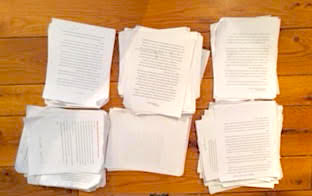
The stacks of paper displayed in the photo to your left is what you wind up with when you channel–or, should I say, crank out–a novel at a NaNoWriMo-like pace. Ten years ago, 50 pages were born in one YA writing class, and 50 more spilled out in another. Seriously in the thick of the YA fiction writer community, it was not a question of if I would finish this book, but when. My story had already piqued the interest of a couple agents and some bestselling novelists. As someone who had been writing fiction since I was eight, it would have been just plain foolishness not to take advantage of the creative opportunities and inspired flow this one plot idea was bringing me.
For a couple months, my flow of fiction was stymied while I gathered up the courage to break up a dysfunctional relationship I had been in for a couple years. My two cats were basically held as ransom by my ex. He knew how much I adored my little girl and boy Bengals, so he figured if he put down his foot to claim them as his, I would not leave him either. I would be lying if I said that wasn’t part of the reason I kept flip-flopping over my decision for several more months.
However, I finally got myself moved out of the house we shared, and I wound up back living with my parents. Witnessing my heartbreak over losing my best furry friends, they agreed that I could adopt a kitten, despite their dislike of animals as pets in general. In a moment of inspiration, I committed to writing fifty more pages in my novel to earn the privilege of bringing new felines into my family. Thinking this would take me a month, at least, I surprised myself by writing more than 50 pages in a week. What can I say? I was fueled by anticipation, excitement and my desire to immerse myself in the kind of love that only an animal can provide.
Alexei turned out to be the perfect writing companion. He’d sit on my lap, or force me into proper posture by prostrating himself behind my back, as I typed away furiously on the computer. He’d look up at me with soulful eyes when I questioned whether to keep going. Purring and gently pawing at me, his love and affection energized the body when I was fatigued, refueled my confidence when it was lagging and reminded me of my worth when I felt beaten.
The next major dash came toward the end of that same year, when I met a woman at a writer’s conference who invited those of us in attendance at her breakout session to submit a draft of our novel to her publishing company. “It doesn’t have to be a complete or perfect, final draft,” she said in encouragement. “Just show me your best work.”
I took the bait–and the challenge–writing and cobbling together what turned out to total more than 200 pages. The novel was in no way finished. There were several huge scenes missing altogether. Dialogue of my two main characters started to sound stilted and coalesce as the story dragged on. My printer acted up, causing half the pages to format oddly, and it refused to display page numbers. Was it better to just wait until everything was right, or did I just take the leap and pray she appreciated my earnestness and recognized the diamond in the rough?
For good or for ill, I took the leap. A couple months later, I received a curt letter and my full manuscript returned to me unmarked. She took issue with the title–which was not a grammatically correct phrase, but made reference to an exact album title, fyi. I honestly don’t remember if she wrote anything else, but I took it for the rejection it was. Even knowing I had sent my novel baby off far too soon, I took to heart the utter lack of interest and regard in my characters and their promising, fictional lives.
While I still hammered away at the book over the next year or so, the overflowing fount of inspiration that had generated the first 200 pages of story began to trickle dry. As Novembers rolled by, I took advantage of NaNoWriMo challenges to dip back into my story, but I was always derailed before the end of the month, whether by illness, job obligations or sheer overwhelm and exhaustion. Eventually, my heart was no longer dwelled in the world which I had created.
Being a writer of many genres, the last several years have been dominated by newswriting, academic writing, essays and opinion pieces, poetry and even a children’s book series and a couple of plays. A little over a year ago, I realized that my years of writing about relationships and my journey toward better health–on my blogs and across multiple media platforms–had spawned a significant body of work. I took my husband’s suggestion to write a book about how I learned to take the reigns over from chronic illness to manifest better health of my body, mind and spirit. So I’ve been immersed in the emotionally exhausting, yet ultimately fulfilling, work of memoir, while also continuing my ghost writing and enrolling in more yoga teacher trainings.
But then the realization of turning 40 began to weigh on my heart. What were the things I had dreamed of accomplishing in my past, yet hadn’t in my present? What were my great passions that weren’t getting a lot of love lately? How could I transform the end of my 30s into a period of celebration and anticipation? Rather than wallow in regret over the past, how could I instead look ahead to 40 with excitement, joy and fulfillment? My answers: completing my first novel and being a published novelist; writing fiction; and using NaNoWriMo, which falls the month before my 40th birthday, as the catalyst for creative fecundity.
It was time to confront my past in order to come back to my creative center. Thus, I returned to my old novel about twins and remembered why I fell in love with them in the first place. Inspired by my original work, my rewrites and the newer material I had written in spurts over the years, I began writing as if I were discovering the story for the first time. Inevitably, I have bumped up against old holes in the plots, questions about the storyline–like which twin’s perspective is stronger to start with, which conflict should lead and which should develop later in the story? Yet I am trying to approach with curiosity and the sense of adventure, rather than with fear and the sense of dread.
Instead of writing completely anew, I dug out my old manuscript to identify what is gold, what was plain rubbish and what deserves a second (or third or tenth) chance. I have to admit sitting amongst to the piles of scenes I first wrote so many years ago, I felt great overwhelm and an insidious desire to just chuck it all. But then I found the voices, the scenes that started it all, and they still warm my soul and stir my heart a decade later.
Today, I write without my feline companion by my side. I sift through what’s stellar and what’s shit on my own. But it helps to know I’m not alone in the struggle to confront self-doubt and creative stuck-ness. Thousands of other writers are facing down their mental demons and opening up their hearts to channel the gifts of the muses, this month, this week, this day. May our writing dreams help fuel us through the rest of this writing month–and beyond.
I’m currently in the midst of rewriting and finally completing a young adult novel for NaNoWriMo (National Novel Writer’s Month) that I first started 10 years ago. Yikes–I know, I can’t believe it’s been that long either! As a story first begun in an informal YA (Young Adult) fiction writing class, further developed in a more formal YA fiction writing course, and then regularly critiqued in an intimate, three-person circle of writers before I lost the fire that lit the first couple hundred pages. I’ve mostly been spinning in circles working independently with the story over the last several years–in between news articles, health and wellness blog posts, ghost writing, tutoring and yoga teacher training–rewriting and rewriting again the major scenes at the start of the novel, while working on new scenes here and there. But as November neared and my 40-day countdown to 40 began, I made the decision to recommit to the fictional world I first began at age 30.
As I’ve sunk my teeth back into the plot and re-bonded with the main characters over the last couple weeks, I’ve fully enjoyed the dashed frenzy to get more words on the page. But something was missing. Someone was missing.
So yesterday, on the first sunny day of the week, I attended a writer’s group for the first time in far too many years. I’m so glad to made the effort! I was pleased to see a rather sizable turnout of about a dozen people. There were award-winning novelists, published memoirists, a seasoned journalist, a TV and book reviewer and a short-story writer learning how to write for screen, as well a budding poet and a budding essayist. I made the acquaintance of the author of a memoir on being a medical marijuana dispensary owner, The Brian Hogan. And I was thrilled to see author Sophronia Scott, with whom I was considering taking a memoir writing class at the Fairfield County Writer’s Studio this past fall. After flipping through its pages yesterday afternoon, I can’t wait to read her collection of essays, Love’s Long Line, which comes out in February 2018.
Big thanks to the British-born award-winning writer Gabi Coatsworth for leading such an informative and inspiring writers’ group. I left fresh with ideas to further pursue, workshops and mini conferences to attend, writing contests to ponder entering, writer’s tools to use, and several new writers to follow. I’m excited to finish up NaNoWriMo with thousands more words behind my belt and a better idea for how to come full circle on this novel at long last.

 “Do you guys specifically seek out places to live that are near bodies of water,” my friend Melissa asked me as we watched the brook tumbling past the hiking trail we followed in the pouring rain. The trailhead was located across the street from my condo complex. “You always seem to find homes that are close to the water.”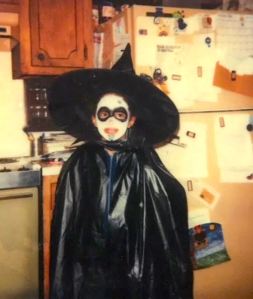
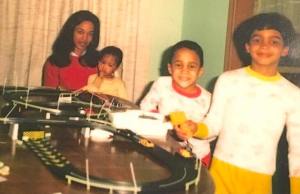 Growing up with two older brothers, I was widely exposed to the world of boys–climbing trees, going fishing, playing video games and breakdancing. I was a soccer player and gymnast who had more speed, strength and power than the dexterity, balance and elegance possessed by my ballet-dancing or horse-riding characters. Thus, I enjoyed creating protagonists with traits and strengths that were opposite of my own. What–I wondered–might it be like to be a girly girl?
 This would have been especially helpful to me, as I was,
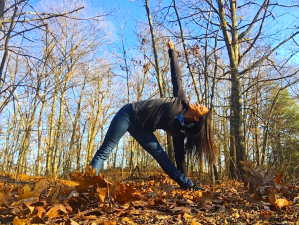 My creativity has nourished and enlivened all vocations and avocations I’ve pursued in adulthood. Being imaginative has equipped me
 A week ago yesterday, my best friend gave me an early birthday surprise as a burst of inspiration to help me close out National Novel Writing Month. I was happily stunned by the email that informed me I was gifted a
 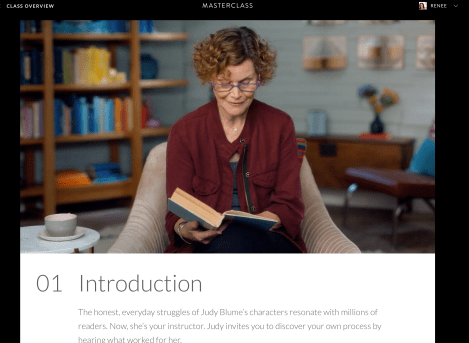 So from about age 8 on, I began writing and writing and writing. I wrote from my life experiences, my pure fantasies and from an imagination stoked and nurtured by reading the best books written for children and young adults at that time. I wrote when I was lonely. I wrote as an escape. I wrote when I was excited about what the future had in store for me. I wrote as another form of play and exploration. I wrote to exercise that mighty muscle of my imagination, which was just as important to me as my strong biceps and springy, speedy legs.

 The stacks of paper displayed in the photo to your left is what you wind up with when you channel–or, should I say, crank out–a novel at a NaNoWriMo-like pace. Ten years ago, 50 pages were born in one YA writing class, and 50 more spilled out in another. Seriously in the thick of the YA fiction writer community, it was not a question of if I would finish this book, but when. My story had already piqued the interest of a couple agents and some bestselling novelists. As someone who had been writing fiction since I was eight, it would have been just plain foolishness not to take advantage of the creative opportunities and inspired flow this one plot idea was bringing me.
 Alexei turned out to be the perfect writing companion. He’d sit on my lap, or force me into proper posture by prostrating himself behind my back, as I typed away furiously on the computer. He’d look up at me with soulful eyes when I questioned whether to keep going. Purring and gently pawing at me, his love and affection energized the body when I was fatigued, refueled my confidence when it was lagging and reminded me of my worth when I felt beaten.
 Renée Can(ada) Writes