What steered the whimsy of autumn winds? What spurred tree limbs To shed their splendor? What lies in store for leaves That can flee the nest no more?
Yes–these scarlet leaves, Which bow and twirl In a final, delicate waltz, Which tremble and falter In fruitless preparation For a fall that won’t ever come.
I don’t know what is it to birth a child, But I know how to press my ear to the earth, To curl my fingers in supplication, To stare at a blank page until they are clear– The mysterious whispers of a hundred lives, And I–the midwife who’ll deliver them into the world.
Does the tree trunk rot and crumble After its leaves wither to dust? When Spring comes once more, Will you lift your face to the sky And still taste the rain?
The latter third of this review of Small Great Things contains limited spoilers.
On Tuesday night, I finished reading the powerful and popular novel Small Great Things, which has been taking up a significant amount of my headspace since I first began it almost a week earlier. Thanks to how meticulously bestselling author Jodi Picoult got into the minds of three characters with markedly distinct perspectives on power, privilege and race, I found myself writing about their nuanced viewpoints in my private journal and repeatedly discussing those issues tackled by the novel in conversations with my husband. After reading the final pages, I admit being disappointed by what I felt was too tidy resolution–as I wrote about in my review of the book on Goodreads–but I couldn’t help wondering if I was being too critical of a novel that had nobly tackled such complex issues, while obviously striking such a deep chord in me.
Curious and willing to delve deeper into this dichotomy, I found a 2016 Q&A with The Oxford Union, in which Picoult spoke to the challenges of writing about racism in this country. Her first attempt to set this divisive issue at the heart of a novel was more than 20 years ago, when she sought to write about an African-American, undercover cop who had been shot several times in the back by white colleagues. She claims to have “failed miserably” in her initial effort at a novel, struggling to create voices, characters and situations that were authentic.
Picoult’s Personal POV on Prejudice, Privilege and Power
“And to be honest, I really questioned whether I even had the right to,” she recalled. “I am very clearly a white woman. I grew up in privilege. What was I going to contribute to a conversation about racism?”
Picoult has made a very successful career out of writing convincingly from an array of perspectives unique from her own. However, she felt that writing about race and racism was different. “It’s very hard for us to talk about without offending people, and so as a result, we often just don’t talk about it at all,” she explained. And yet her desire and willingness to write about it never really went away.
Then, in 2012, the novelist heard the news of an African American woman, a labor and delivery nurse of 20 years, who had delivered a baby in Flint, Mich. The baby’s father, sporting a swastika tattoo, demanded that the nurse supervisor ensure no African-American personnel touch his child. This became the seed for the story of protagonist Ruth Jefferson in Small Great Things.
In real life, the nurse sued the hospital and received an out-of-court settlement. But in Picoult’s novel, the nurse faces a different scenario: left alone with the baby when something goes wrong, she is forced to decide whether to follow her supervisor’s orders or to save the baby’s life. Because of her decision, she winds up on trial with “a white public defender who, like me, like a lot of my friends, would never consider herself to be racist,” said Picoult.
As a novelist, she then considered telling the story from three different points of view–the African-American nurse, the white public defender and the white supremacist father. The story would follow each of them as they unraveled their beliefs about power, privilege and race. Having changed her focus and her audience, she knew she would now be able to finish the book.
“I wasn’t writing a book to tell people of color what their lives were like. That’s never going to be my story to tell,” she explained. “I was writing to tell people who look like me–people with light skin–that, although it’s easy for us to point to a white supremacist and say, ‘oh that’s a racist,’ it’s very hard to point to ourselves and say the same thing.”
The author admits that it would have been unfair to ask readers to unpack their biases without first doing it herself. Born into a generation that was never formally educated in social justice, Picoult perceived herself–as does Kennedy, the book’s white public defender–as “a very liberal, open-minded person, with friends from all walks of life. I did not think of myself as a racist.” However, after gaining more education in racial justice, she realized that racism is not just about prejudice; it’s also about power. And in the United States, as the author said, “if you look like me, you have all the power.”
Boy, is that a powerful observation! I have even more respect for Picoult’s willingness to take on this huge conversation in a novel after hearing her talk about this revelation. She was not just able and willing to do the messy work of reflecting on her own perceptions; she was actually curious and eager to dig in deeper.
She spent more than 100 hours interviewing 10 women of color to gain insight into their varied experiences in an effort to write from a black woman’s perspective with empathy and sensitivity. To write from the white supremacist Turk’s perspective, a man who led a life grounded in hate, she also spent time with two former white supremacists who had formally left the Movement.
Nuanced Perspectives on Race and Racism is No Small Thing
Her research proved quite fruitful because Picoult was able to deftly delve into the complex backgrounds of Ruth, Kennedy and Turk in her novel. Her compassionate explorations of the experiences and motivations driving all the main characters in her novel worked to build a bridge of understanding–even engendering empathy–of people we readers might not necessarily like or agree with at all. While the ugliness of Turk’s beliefs and violent actions were off-putting, to say the very least, the genuine grief he expresses for having lost a son evoked real emotion from this reader.
Yes, the story was uncomfortable for me to read, at times–it had to be, especially when presenting the perspective of the white supremacist Turk. Picoult admitted that writing his voice and exploring his “disgusting” beliefs about non-white people made her feel “dirty”. Yet I too was curious to explore a viewpoint I’ve rejected with every fiber of my being, as it challenged my own perceptions.
As I wrote about in my journal, I absolutely related to the description of Ruth’s childhood experience of growing up as an ‘other’ in an overwhelmingly white community. As much as I felt a sense of belonging among my friends, there was an increasing sense of alienation and differentness in my community as I grew older. I did not really fit into stereotypical African American culture that I was occasionally exposed to either. Ruth had greater exposure, living in a black community in which her sister was thoroughly immersed, but she too mostly felt like an outsider there.
Like Ruth, I did my best to fit in with my white classmates as much as I was able, but there was no escaping the reality that I was, in fact, a little different. Some of my classmates were more than happy to point out it out often enough, especially in high school; their eagerness to bring up stereotypes about athletic and academic achievement stung more than I ever let on. So, gaining admission to one of the most competitive universities in the nation made me feel as if I’d won some type of challenge…it took several more years to realize that my most dangerous competitor was myself. As a young adult I spent a lot of time exploring, experimenting with and reflecting on my identity before coming to place of acceptance and love for my self. Yet I am still being forced to confront my own biases and misperceptions.
A Closer Look at Small Great Things
As she endures the trial for a crime she did not commit, Ruth comes to the painful realization that keeping a low profile–behaving as if her skin color is invisible to others–would not save her (or her son) from racial injustice. Picoult shared in the Q&A how a woman explained to her racial justice workshop how she went in the world “with a metaphorical mask so that she can be the kind of black woman other people can handle.” Ruth does this too for most of her life, but that changes when she challenges public defender Kennedy’s insistence that “a criminal lawsuit is no place to bring up race,” and that if you do, “you can’t win”. When Ruth is finally given the opportunity to speak in court, she understandably cannot keep her indignation from her testimony.
Brava to her. It is unfortunate, though, that she is portrayed as an “angry black woman” shooting herself in the foot. It is not surprising, however, that her own lawyer perceives it as such.
I did empathize with Kennedy’s struggle to understand how she still clung to her privilege, despite her good works and good intentions serving the underprivileged. I think her sole night spending time in an environment where she was a minority opened her eyes a little bit, but I found it difficult to swallow that such a brief and limited exposure would be enough to give her true clarity about being on the receiving end of racism.
As part of her experiment, she enters a drugstore to look at hair products “foreign” to her. She thinks: I have no idea what they do, why they’re necessary for black people, or how to use them. Instead of settling into her ignorance, I couldn’t help wondering why she does not attempt to find out from some women who do use them–you know, women like her client Ruth.
It also rubbed me the wrong way how she is the one relentlessly tearing into Ruth’s son Edison when he misguidedly spray paints racial slurs on a wall (I get that he’s a kid who is terrified of his mom getting convicted of murder, but why on earth does he do this?) And it also got under my skin that white lawyer Kennedy was the one correcting black defendant Ruth that what she really needs is not equality, but equity. I appreciated the intent behind explaining the differences between equity and equality, but her speech comes across like she is reading from a textbook:
“Equality is treating everyone the same. But equity is taking differences into account, so everyone has a chance to succeed.” I look at her. “The first one sounds fair. The second one is fair. It’s equal to give a printed test to two kids. But if one’s blind and one’s sighted, that’s not true. You ought to give one a Braille test and one a printed test, which both cover the same material. All this time, I’ve been giving the jury a print test, because I didn’t realize that they’re blind. That I was blind. Please, Ruth. I think you’ll like hearing what I have to say.”
Kennedy does ultimately rise to the occasion by talking about active and passive racism, bias, privilege and power in her closing statement in court. Ruth expresses gratitude that her lawyer finally took “the elephant in the room and paraded it in front of the judge.” I couldn’t help feeling uneasy that this speech alone had the ultimate power that it did, but giving it was the right thing for Kennedy to do. She uses her power and privilege to amplify Ruth’s own voice.
I was also rather amazed (not in a good way) by the plot twist that wraps up Turk’s story. It felt far too tidy and trite. I won’t get into it in detail here–it was that disappointing, to me. What I will do is give Picoult great praise for her overall effort to bring these voices and perspectives to life.
Novels as Catalysts For Critical Social Dialogue
It is no small thing to tackle such thorny issues as race, privilege and power. For a significant part of this novel, I think Picoult writes about it surprisingly well and with incredible insight. By packaging complex issues in a palatable and relatable enough manner, she presents an invitation for many folks who couldn’t or wouldn’t otherwise participate in a conversation about race with true transparency and authenticity to enter in honest dialogue about the perspectives raised in this fictionalized tale.
In this way, the novel serves as a catalyst for the crucial dialogue that our mucked-up society needs to have to survive. Rather than silencing the perspectives that we don’t like or disagree with or that simply make us uncomfortable, we need to get real and honest, truly listening to each other. By writing from these three disparate viewpoints, Picoult’s writing encourages to do just that. And, as she alludes to in Kennedy and Ruth’s discussion about equity, we as a society need to do everything we can to ensure that each of us gets a place at the table, that every voice gets the opportunity be heard and the support to speak up when it wants and needs to. It’s the only way we’ll ever be able to truly move forward and evolve together.
What more can you ask from a novel than lovable characters who live and breathe beyond the page? A young writer finding her voice, telling a story (fanfic) within a story, an innocent college freshman stumbling and fumbling into first love with a totally crush-worthy guy, and a twin carving out her own, independent identity while still honoring the sisterly bond forged through the crucible of childhood. Honestly, what’s not to love about Rainbow Rowell’s un-put-downable Fangirl? I finished the last pages with tears in my eyes and a high-wattage grin on my face.
The novel also offers a sensitive and thoughtful portrayal of mental illness and the aftereffects of childhood abandonment. Perhaps what I related to most was protagonist Cath’s rollercoaster struggle to fully face and navigate through her considerable mental blocks to claim her narrative. If she fails to brave up for this inner battle, can she ever truly share her quirky, creative and compassionate self with others? Can we?
As a writer, I will definitely be returning to this book again and again for inspiration and Professor Piper’s pep talks. Once I finished the last page, I leaped out of the bed to park myself in front of the laptop to get back to work on my own novel. There’s much to study and absorb, appreciate and admire, and reminisce about and reflect on throughout Fangirl, which is really two stories in one. (Who else wanted to read more about Simon Snow in Cath’s serial, Carry On, after reading fictional excerpts of it throughout the novel? Well, it looks like we’re in luck!) Rowell is also author of the award-winning Eleanor & Park, which I can’t believe I haven’t read yet, but it’s definitely going on my ‘to-read’ list.
Fangirl Favorite Quotables:
‘”…I pick my life apart that way, try to understand it better by writing straight through it.’
“So everything in your books is true?”
The professor tilted her head and hummed. “Mmm…yes. And no. Everything starts with a little truth, then I spin my webs around it–sometimes I spin completely away from it. But the point is, I don’t start with nothing.”‘
‘This wasn’t good, but it was something. Cath could always change it later. That was the beauty in stacking up words–they got cheaper, the more you had of them. It would feel good to come back and cut this when she’d worked her way to something better.’
‘Sometimes writing is running downhill, your fingers jerking behind you on the keyboard the way your legs do when they can’t quite keep up with gravity.
Cath fell and fell, leaving a trail of messy words and bad similes behind her.’
It was time to confront my past in order to come back to my creative center. Thus, I returned to my old novel about twins and remembered why I fell in love with them in the first place. Inspired by my original work, my rewrites and the newer material I had written in spurts over the years, I began writing as if I were discovering the story for the first time.
The stacks of paper displayed in the photo to your left is what you wind up with when you channel–or, should I say, crank out–a novel at a NaNoWriMo-like pace. Ten years ago, 50 pages were born in one YA writing class, and 50 more spilled out in another. Seriously in the thick of the YA fiction writer community, it was not a question of if I would finish this book, but when. My story had already piqued the interest of a couple agents and some bestselling novelists. As someone who had been writing fiction since I was eight, it would have been just plain foolishness not to take advantage of the creative opportunities and inspired flow this one plot idea was bringing me.
For a couple months, my flow of fiction was stymied while I gathered up the courage to break up a dysfunctional relationship I had been in for a couple years. My two cats were basically held as ransom by my ex. He knew how much I adored my little girl and boy Bengals, so he figured if he put down his foot to claim them as his, I would not leave him either. I would be lying if I said that wasn’t part of the reason I kept flip-flopping over my decision for several more months.
However, I finally got myself moved out of the house we shared, and I wound up back living with my parents. Witnessing my heartbreak over losing my best furry friends, they agreed that I could adopt a kitten, despite their dislike of animals as pets in general. In a moment of inspiration, I committed to writing fifty more pages in my novel to earn the privilege of bringing new felines into my family. Thinking this would take me a month, at least, I surprised myself by writing more than 50 pages in a week. What can I say? I was fueled by anticipation, excitement and my desire to immerse myself in the kind of love that only an animal can provide.
Alexei turned out to be the perfect writing companion. He’d sit on my lap, or force me into proper posture by prostrating himself behind my back, as I typed away furiously on the computer. He’d look up at me with soulful eyes when I questioned whether to keep going. Purring and gently pawing at me, his love and affection energized the body when I was fatigued, refueled my confidence when it was lagging and reminded me of my worth when I felt beaten.
The next major dash came toward the end of that same year, when I met a woman at a writer’s conference who invited those of us in attendance at her breakout session to submit a draft of our novel to her publishing company. “It doesn’t have to be a complete or perfect, final draft,” she said in encouragement. “Just show me your best work.”
I took the bait–and the challenge–writing and cobbling together what turned out to total more than 200 pages. The novel was in no way finished. There were several huge scenes missing altogether. Dialogue of my two main characters started to sound stilted and coalesce as the story dragged on. My printer acted up, causing half the pages to format oddly, and it refused to display page numbers. Was it better to just wait until everything was right, or did I just take the leap and pray she appreciated my earnestness and recognized the diamond in the rough?
For good or for ill, I took the leap. A couple months later, I received a curt letter and my full manuscript returned to me unmarked. She took issue with the title–which was not a grammatically correct phrase, but made reference to an exact album title, fyi. I honestly don’t remember if she wrote anything else, but I took it for the rejection it was. Even knowing I had sent my novel baby off far too soon, I took to heart the utter lack of interest and regard in my characters and their promising, fictional lives.
While I still hammered away at the book over the next year or so, the overflowing fount of inspiration that had generated the first 200 pages of story began to trickle dry. As Novembers rolled by, I took advantage of NaNoWriMo challenges to dip back into my story, but I was always derailed before the end of the month, whether by illness, job obligations or sheer overwhelm and exhaustion. Eventually, my heart was no longer dwelled in the world which I had created.
Being a writer of many genres, the last several years have been dominated by newswriting, academic writing, essays and opinion pieces, poetry and even a children’s book series and a couple of plays. A little over a year ago, I realized that my years of writing about relationships and my journey toward better health–on my blogs and across multiple media platforms–had spawned a significant body of work. I took my husband’s suggestion to write a book about how I learned to take the reigns over from chronic illness to manifest better health of my body, mind and spirit. So I’ve been immersed in the emotionally exhausting, yet ultimately fulfilling, work of memoir, while also continuing my ghost writing and enrolling in more yoga teacher trainings.
But then the realization of turning 40 began to weigh on my heart. What were the things I had dreamed of accomplishing in my past, yet hadn’t in my present? What were my great passions that weren’t getting a lot of love lately? How could I transform the end of my 30s into a period of celebration and anticipation? Rather than wallow in regret over the past, how could I instead look ahead to 40 with excitement, joy and fulfillment? My answers: completing my first novel and being a published novelist; writing fiction; and using NaNoWriMo, which falls the month before my 40th birthday, as the catalyst for creative fecundity.
It was time to confront my past in order to come back to my creative center. Thus, I returned to my old novel about twins and remembered why I fell in love with them in the first place. Inspired by my original work, my rewrites and the newer material I had written in spurts over the years, I began writing as if I were discovering the story for the first time. Inevitably, I have bumped up against old holes in the plots, questions about the storyline–like which twin’s perspective is stronger to start with, which conflict should lead and which should develop later in the story? Yet I am trying to approach with curiosity and the sense of adventure, rather than with fear and the sense of dread.
Instead of writing completely anew, I dug out my old manuscript to identify what is gold, what was plain rubbish and what deserves a second (or third or tenth) chance. I have to admit sitting amongst to the piles of scenes I first wrote so many years ago, I felt great overwhelm and an insidious desire to just chuck it all. But then I found the voices, the scenes that started it all, and they still warm my soul and stir my heart a decade later.
Today, I write without my feline companion by my side. I sift through what’s stellar and what’s shit on my own. But it helps to know I’m not alone in the struggle to confront self-doubt and creative stuck-ness. Thousands of other writers are facing down their mental demons and opening up their hearts to channel the gifts of the muses, this month, this week, this day. May our writing dreams help fuel us through the rest of this writing month–and beyond.
I’m currently in the midst of rewriting and finally completing a young adult novel for NaNoWriMo (National Novel Writer’s Month) that I first started 10 years ago. Yikes–I know, I can’t believe it’s been that long either! As a story first begun in an informal YA (Young Adult) fiction writing class, further developed in a more formal YA fiction writing course, and then regularly critiqued in an intimate, three-person circle of writers before I lost the fire that lit the first couple hundred pages. I’ve mostly been spinning in circles working independently with the story over the last several years–in between news articles, health and wellness blog posts, ghost writing, tutoring and yoga teacher training–rewriting and rewriting again the major scenes at the start of the novel, while working on new scenes here and there. But as November neared and my 40-day countdown to 40 began, I made the decision to recommit to the fictional world I first began at age 30.
As I’ve sunk my teeth back into the plot and re-bonded with the main characters over the last couple weeks, I’ve fully enjoyed the dashed frenzy to get more words on the page. But something was missing. Someone was missing.
So yesterday, on the first sunny day of the week, I attended a writer’s group for the first time in far too many years. I’m so glad to made the effort! I was pleased to see a rather sizable turnout of about a dozen people. There were award-winning novelists, published memoirists, a seasoned journalist, a TV and book reviewer and a short-story writer learning how to write for screen, as well a budding poet and a budding essayist. I made the acquaintance of the author of a memoir on being a medical marijuana dispensary owner, The Brian Hogan. And I was thrilled to see author Sophronia Scott, with whom I was considering taking a memoir writing class at the Fairfield County Writer’s Studio this past fall. After flipping through its pages yesterday afternoon, I can’t wait to read her collection of essays, Love’s Long Line, which comes out in February 2018.
Big thanks to the British-born award-winning writer Gabi Coatsworth for leading such an informative and inspiring writers’ group. I left fresh with ideas to further pursue, workshops and mini conferences to attend, writing contests to ponder entering, writer’s tools to use, and several new writers to follow. I’m excited to finish up NaNoWriMo with thousands more words behind my belt and a better idea for how to come full circle on this novel at long last.


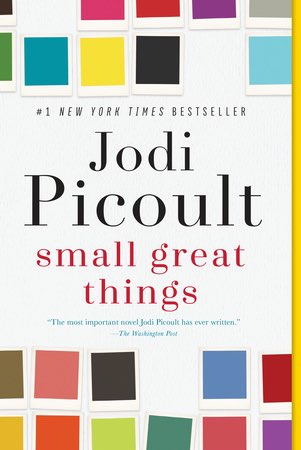
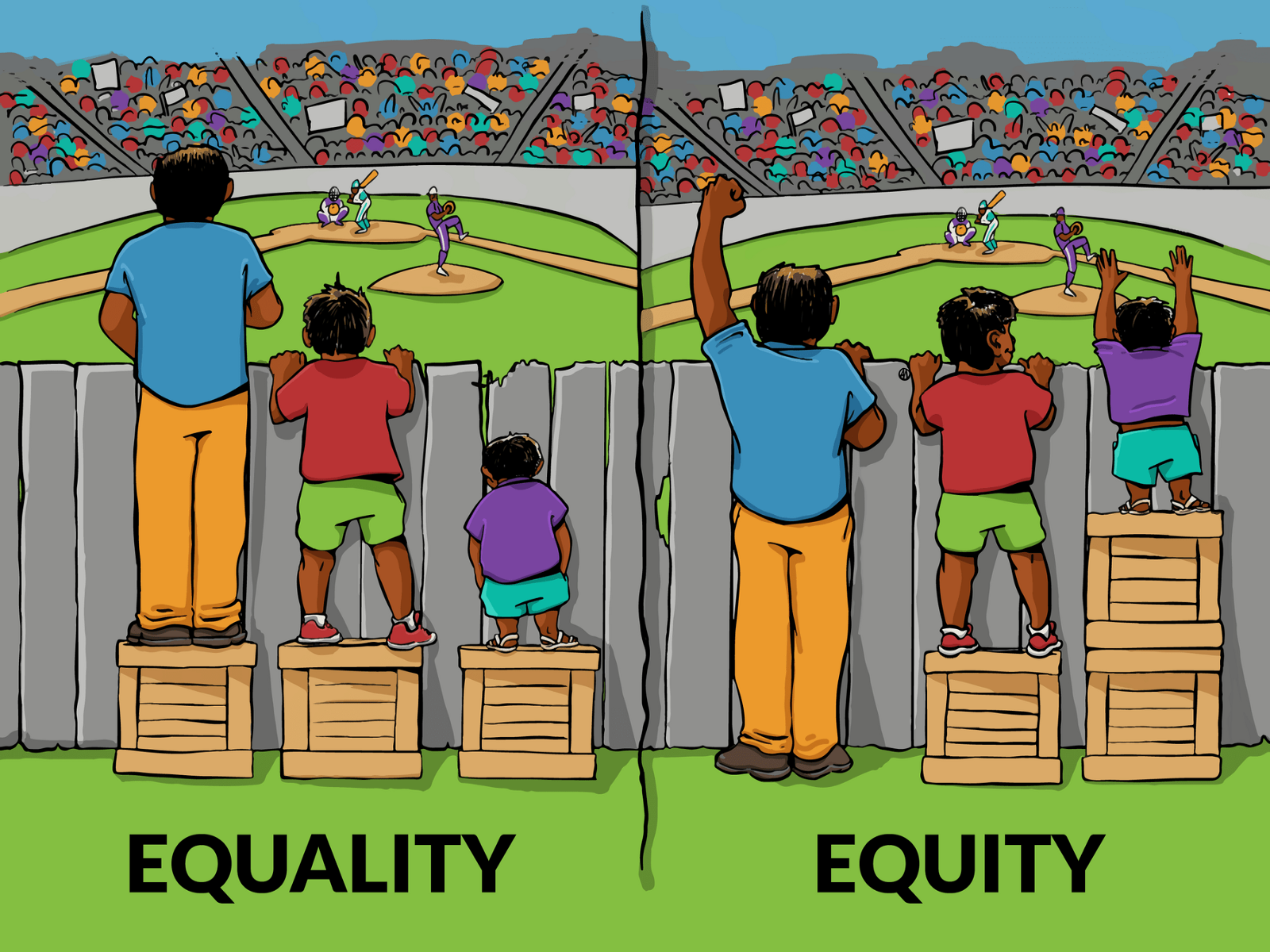 It also rubbed me the wrong way how she is the one relentlessly tearing into Ruth’s son Edison when he misguidedly spray paints racial slurs on a wall (I get that he’s a kid who is terrified of his mom getting convicted of murder, but why on earth does he do this?) And it also got under my skin that white lawyer Kennedy was the one correcting black defendant Ruth that what she really needs is not equality, but equity. I appreciated the intent behind explaining the differences between
  What more can you ask from a novel than lovable characters who live and breathe beyond the page? A young writer finding her voice, telling a story (fanfic) within a story, an innocent college freshman stumbling and fumbling into first love with a totally crush-worthy guy, and a twin carving out her own, independent identity while still honoring the sisterly bond forged through the crucible of childhood. Honestly, what’s not to love about Rainbow Rowell’s un-put-downable
 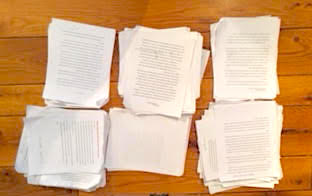 The stacks of paper displayed in the photo to your left is what you wind up with when you channel–or, should I say, crank out–a novel at a NaNoWriMo-like pace. Ten years ago, 50 pages were born in one YA writing class, and 50 more spilled out in another. Seriously in the thick of the YA fiction writer community, it was not a question of if I would finish this book, but when. My story had already piqued the interest of a couple agents and some bestselling novelists. As someone who had been writing fiction since I was eight, it would have been just plain foolishness not to take advantage of the creative opportunities and inspired flow this one plot idea was bringing me.
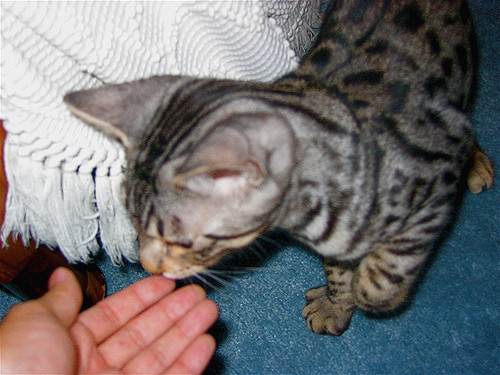 Alexei turned out to be the perfect writing companion. He’d sit on my lap, or force me into proper posture by prostrating himself behind my back, as I typed away furiously on the computer. He’d look up at me with soulful eyes when I questioned whether to keep going. Purring and gently pawing at me, his love and affection energized the body when I was fatigued, refueled my confidence when it was lagging and reminded me of my worth when I felt beaten.
 Renée Can(ada) Writes