What steered the whimsy of autumn winds? What spurred tree limbs To shed their splendor? What lies in store for leaves That can flee the nest no more?
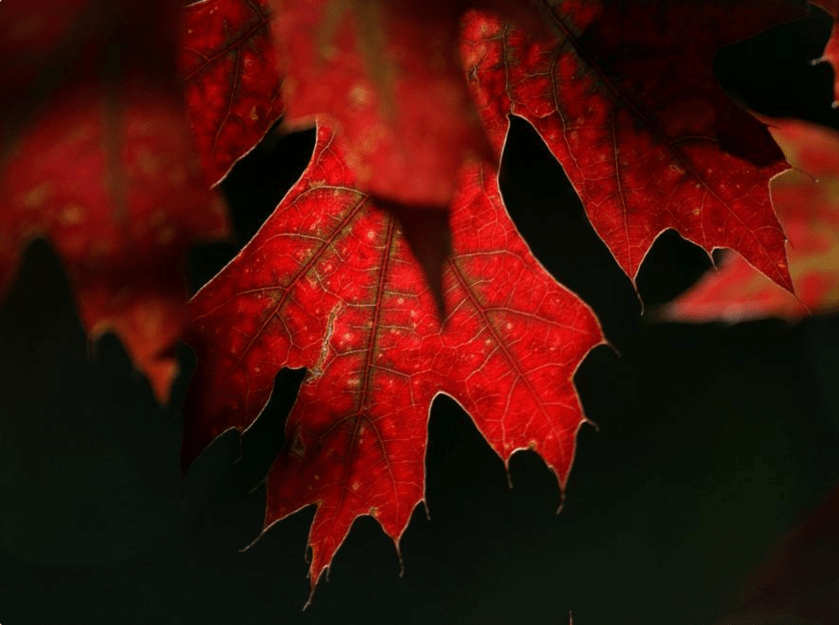
Yes–these scarlet leaves, Which bow and twirl In a final, delicate waltz, Which tremble and falter In fruitless preparation For a fall that won’t ever come.
I don’t know what is it to birth a child, But I know how to press my ear to the earth, To curl my fingers in supplication, To stare at a blank page until they are clear– The mysterious whispers of a hundred lives, And I–the midwife who’ll deliver them into the world.
Does the tree trunk rot and crumble After its leaves wither to dust? When Spring comes once more, Will you lift your face to the sky And still taste the rain?
When I was a child, I lived and breathed fiction, inventing detailed characters and complex worlds everywhere I turned. In my fiction, I was a ballerina, a mini Indiana Jones or a resistance fighter. I was an only child growing up with a single father, an orphan raising my three siblings, or I was the oldest of seven brothers and sisters with a widowed mother. I lived in the city, worked on a farm, attended elite boarding schools somewhere far from home, or traveled across invented countries in Europe in the midst of a fictitious war.
Immersing in Imaginary Lives
As a curious little girl, I soaked up my father’s fascinating stories about being one of nine children living on a tobacco farm in North Carolina in the ‘50s. His family grew their own food, and he and his siblings played sports with the fruit crops. They raised animals–from barn cats and chickens to mules and cows–as pets or as livestock. His mother cooked from scratch and regularly baked the favorite desserts of each child. And it seemed like there was always someone his age–boy or girl–with whom he could play. I liked to imagine what it would be like growing up in such a big family in the country.
My mother, on the other hand, was raised in the city as the only child of older parents. She had grown up in the unfamiliar-to-me world of classical piano recitals, debutante parties and local beauty pageants. Hearing stories about her more genteel upbringing (at least, in comparison to mine) encouraged me to fantasize about living in privilege, traveling across the country for ski vacations and attending all-girls’ boarding schools in Europe.
In real life, my parents, brothers, and I lived in the mostly white, New England suburbs during the ‘80s. I had never left the country and had only really traveled down south. Yet, I knew from my favorite novels, movies and National Geographic magazines that there were billions of people out there who lived a reality completely unfamiliar to me, in wholly different environments and raised within richly diverse cultures. I loved to fantasize what it would be like to be born into different families in faraway states or exotic countries.
A Girly Girl in A Tomboy World
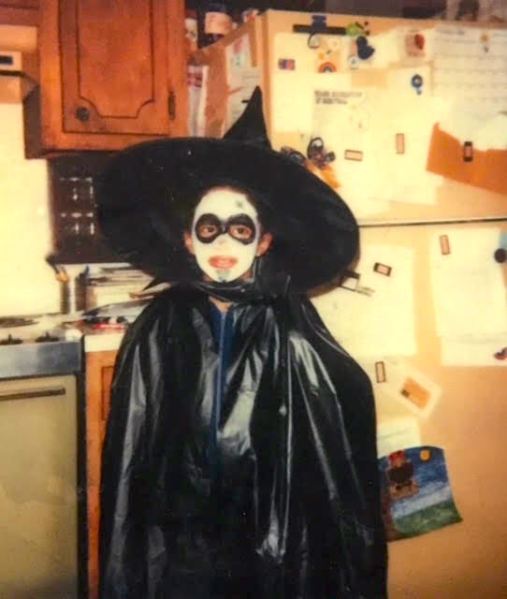
Growing up with two older brothers, I was widely exposed to the world of boys–climbing trees, going fishing, playing video games and breakdancing. I was a soccer player and gymnast who had more speed, strength and power than the dexterity, balance and elegance possessed by my ballet-dancing or horse-riding characters. Thus, I enjoyed creating protagonists with traits and strengths that were opposite of my own. What–I wondered–might it be like to be a girly girl?
In truth, I got a kick out of watching the WWF Superstars of Wrestling and kung fu films on Saturdays with my brothers, and I enjoyed creating lively scenes with my M.A.S.K. action figures. Yet, I also really loved playing dress-up and re-enacting the dancing, love scenes of favorite films–like The Sound of Music and Dirty Dancing–with my Barbies. Of course, my best, girl friends were happy to play dolls with me when they visited, but they unfortunately didn’t live with me, like my brothers did. While the boys occasionally indulged me in a make-believe session or two, their hearts were never in it as much as I wished; when they entered adolescence, they stopped playing along all together.
My Cabbage Patch Kids were my surrogate children, but I had to invent sisters through the characters I crafted. In my stories, I had a multitude of female siblings–both older ones whom I could ask proper girly questions and younger ones who pestered me for attention because they admired and looked up to me. Sisterhood remains one of the most explored and fascinating territories of my fiction writing to this day.
The childhood wistfulness for sisters perhaps stemmed partly from instinctively sensing that I did, in fact, have those other sibling connections out there somewhere. It was confirmed in early adulthood that I had both an older and younger sister (and brothers), children my father had with women other than my mom. While I knew of the older sister from a very young age, I didn’t understand the concept of having a sibling who lived several states away and whom I’d never met until my early teens. She couldn’t teach me how to properly put on make up or to effortlessly flirt with adolescent boys. So for most of my youth, my distant sister was less real to me than Beezus, the older sister of Ramona in Beverly Cleary’s classic children’s series. While I knew from books and from friends that older sisters could be just as bothersome as having brothers sometimes was, I also observed that they were a key resource for navigating that tempestuous– and sometimes, downright terrible–terrain of female adolescence.
This would have been especially helpful to me, as I was, to quote the fierce songstress Ani DiFranco “the only whatever I am in the room,” with regard to ethnicity, at least. No one else had my skin color or hair or my physique. Make-up colors that looked great on my friends made me look like a clown. The clothing styles that suited wide hips and flat butts did not favor my round but and muscular thighs.
And my hair? Don’t get me started. I was known for my signature braided pigtails until fifth grade, when I announced to my mother that I now wanted to wear my hair down, like all the other girls. Oh, the humiliation I put my poofy locks through trying to mimic the swooping hairstyles of my fellow, female classmates. I had an ‘old school’ mother from the South who would administer straightening perms for me and roll my hair up in curlers so that it would, after an hour under a salon hood dryer, lie smooth. However, it was never bone straight, and it always had the big bounce of the hairdos my mom favored that were popular in the 60s and captured so perfectly in the film Shag. I figured if I had had an older sister, she would have experimented on her own hair enough to discover what flattered ‘girls like us’; and if not, at least we would be riding in the same, outlier boat together.
The Girls from Shag–Melaina, Carson, Pudge and Luanne/Src: The Island Packet
My loving brothers were generous with advice, but they were popular, star athletes, and their boy realities differed significantly from the more offbeat and bookish female self I had gradually grown into in adolescence. So, I learned about romance from books, and I had my first relationships on the written page. I wrote myself into effortlessly attractive and endearing characters who had meaningful romantic relationships with dreamy boys. I was so convinced of the power of the written word, in fact, that I eventually could only properly communicate with guys about my feelings through writing them letters. And I wrote a lot of flowery, impassioned letters that baffled plenty of oblivious boys.
I also thought I was being generous by rewriting myself as a protagonist who didn’t have to struggle with feeling like she never fully fit in. My heroines were wise, bold and confident in the company of the cool kids. They always knew the right things to say, and, by being themselves, they charmed everyone with their brilliance and beauty. But if, on occasion, they were more like the real me, their blunders were still adorable and delightful. And most had knowing sisters who advised them on dating boys and coached them in looking fabulous. When my female alter egos did look out-of-the-ordinary, it was because they purposely wanted to stand out from the homogeneous crowd.
Throughout my youth, I spent a lot of time and energy in imaginary worlds where an exploration of different realities and identities was not only acceptable, but an admired and treasured pursuit. I honestly believe that having the creative license to try on different hats and follow different storylines through my writing gave me the confidence to ultimately accept both the congruous and contradictory aspects of my self. So, by my mid to late teens, I had developed the courage to more fully embrace being uniquely me–idiosyncrasies and all.
How My Imaginary Lives Helped Me Reinvent Myself
Despite all the effort I exerted in my youth to live and breathe in make-believe worlds for varying lengths of time, I sincerely enjoyed my very real childhood. I admired and respected my amazing parents, who encouraged my passions, supported my pursuits and graced me with unconditional love and plenty of affirmation. I adored my older brothers, who were my earliest allies and cheerleaders, who taught me so much about relating in the world and who introduced me to the incredible passions that filled their lives. I also had a myriad of my own, rewarding hobbies and pastimes that kept me entertained and energized, both alone and in the company of diverse groups of people. I grew close to kids with disparate personalities, some of whom were just buddies for a season, while others became bosom friends I still remain close to today. Most of all, growing up the way that I did showed me how my imagination was something to be thoroughly explored and embraced; doing so would arm me to singularly face any significant challenge that I have encountered in life.
My creativity has nourished and enlivened all vocations and avocations I’ve pursued in adulthood. Being imaginative has equipped me to think outside the box, while shaping an unusual career path that is a better fit for me than a traditional trajectory. Years of reading and writing about other lives, other worlds and other realities have enabled me to truly put myself in someone else’s shoes; nurturing a sincere empathy and compassion for others–and for myself. These qualities are what have enabled me to strengthen and deepen my relationships with others.
Immersing myself in the deep waters of make-believe as a child also gave me the life jackets of hope, resilience and self-assurance as an adult facing the trials of chronic illness. Burgeoning belief in–and love for–self have been incredibly instrumental in my healing journey. Because of all the inner exploration and self-reflection I have done in both my fiction and non-fiction writing, I have learned who I truly am–separate from my physical abilities and health limitations, beyond any surface-level characterizations or restrictive, societal labels.
As a result, I’ve had the amazing opportunity—the great privilege and pleasure, really—to reinvent myself a myriad of times, on paper and in real life. Some of my incarnations have been more ‘successful’ than others, of course, but all have given me the chance to learn new levels of being. I’d like to think that along every plot I carved in my life, I grow into a more nurturing and loving friend, relative and life partner; that with each new story I cultivate, I refine and evolve my character as an observant writer–always, still–and as a constructively engaged citizen of the world.
What more can you ask from a novel than lovable characters who live and breathe beyond the page? A young writer finding her voice, telling a story (fanfic) within a story, an innocent college freshman stumbling and fumbling into first love with a totally crush-worthy guy, and a twin carving out her own, independent identity while still honoring the sisterly bond forged through the crucible of childhood. Honestly, what’s not to love about Rainbow Rowell’s un-put-downable Fangirl? I finished the last pages with tears in my eyes and a high-wattage grin on my face.
The novel also offers a sensitive and thoughtful portrayal of mental illness and the aftereffects of childhood abandonment. Perhaps what I related to most was protagonist Cath’s rollercoaster struggle to fully face and navigate through her considerable mental blocks to claim her narrative. If she fails to brave up for this inner battle, can she ever truly share her quirky, creative and compassionate self with others? Can we?
As a writer, I will definitely be returning to this book again and again for inspiration and Professor Piper’s pep talks. Once I finished the last page, I leaped out of the bed to park myself in front of the laptop to get back to work on my own novel. There’s much to study and absorb, appreciate and admire, and reminisce about and reflect on throughout Fangirl, which is really two stories in one. (Who else wanted to read more about Simon Snow in Cath’s serial, Carry On, after reading fictional excerpts of it throughout the novel? Well, it looks like we’re in luck!) Rowell is also author of the award-winning Eleanor & Park, which I can’t believe I haven’t read yet, but it’s definitely going on my ‘to-read’ list.
Fangirl Favorite Quotables:
‘”…I pick my life apart that way, try to understand it better by writing straight through it.’
“So everything in your books is true?”
The professor tilted her head and hummed. “Mmm…yes. And no. Everything starts with a little truth, then I spin my webs around it–sometimes I spin completely away from it. But the point is, I don’t start with nothing.”‘
‘This wasn’t good, but it was something. Cath could always change it later. That was the beauty in stacking up words–they got cheaper, the more you had of them. It would feel good to come back and cut this when she’d worked her way to something better.’
‘Sometimes writing is running downhill, your fingers jerking behind you on the keyboard the way your legs do when they can’t quite keep up with gravity.
Cath fell and fell, leaving a trail of messy words and bad similes behind her.’
A prevailing theme that threads through my work and my writing is the concept of change and one’s ability to transform him or herself at any time or point in one’s life. It’s not surprising, really, when you consider that my name, Renée, literally means ‘reborn’ in French. Whether by necessity or by choice, I feel like I’m perennially giving birth to revised (and hopefully improved) versions of myself. I believe this drive comes not from an unrelenting disappointment with who I am and what I’ve accomplished; instead, it recognizes the seemingly unlimited potential for which I–and all of us–have the capacity.
This is not to say that I’ve deluded myself into thinking or wanting to be someone other than myself. Rather, I truly seek to be the best version of me as I can be. Different periods of time and changing circumstances necessitate revisioning what that best self is.
Believing that humans are hardwired for self-actualization, psychologist Abraham Maslow wrote: ‘I think of the self-actualizing man not as an ordinary man with something added, but rather as the ordinary man with nothing taken away.” When I envision a life where nothing is taken away from my greatest self, I see a life freed from the outgrown models and perceived failures of the past and the rose-colored ideals and absurd expectations of the future. When I let go of whom I think I should be, I set myself free.
Commit to Being Here, Now in 2018
So for 2018, I am tossing out radical New Year’s resolutions that are nigh impossible to attain. I am dismissing outrageous declarations that ignore the natural, inevitable changes of life. Instead, I claim smaller–yet, perhaps more potent–personal revolutions.
There is freedom waiting for you,
On the breezes of the sky,
And you ask “What if I fall?”
Oh but my darling,
What if you fly?
–Erin Hanson
But what exactly does this mean for me as a writer:
I commit to showing up to the page, regardless of my emotions, energy levels or time constraints.
I let go of expectations of how I think the day of writing could or should go.
I get fully present with my purpose and my passion, letting them guide my process and progress.
I allow myself to immerse in the moment. Nothing else matters except what I am doing right here, right now.
I bring to the page everything I have and all that I am, invoking and engaging all my senses.
I take great leaps of faith. I risk shitty writing and ‘failures’. I write despite feelings of imposter syndrome–I fake it until I make it. I embrace the possibilities of moments of brilliance, pure joy and fulfilling my deepest desires and dreams.
I align myself with the cyclical flow, creative force and unlimited potential of the extraordinary universe. Wholly present, centered and grounded, and fully embodying my body, mind and soul–I am. So Hum
She Let Go
“She Let Go” A Poem by Rev. Safire Rose
She let go.
Without a thought or a word, she let go. She let go of fear. She let go of the judgments. She let go of the confluence of opinions swarming around her head. She let go of the committee of indecision within her. She let go of all the ‘right’ reasons. Wholly and completely, without hesitation or worry, she just let go.
She didn’t ask anyone for advice. She didn’t read a book on how to let go… She didn’t search the scriptures.
She just let go.
She let go of all of the memories that held her back. She let go of all of the anxiety that kept her from moving forward. She let go of the planning and all of the calculations about
how to do it just right.
She didn’t promise to let go. She didn’t journal about it. She didn’t write the projected date in her day-timer. She made no public announcement and put no ad in the paper. She didn’t check the weather report or read her daily horoscope.
She just let go.
She didn’t analyse whether she should let go. She didn’t call her friends to discuss the matter. She didn’t do a five-step Spiritual Mind Treatment. She didn’t call the prayer line. She didn’t utter one word. She just let go.
No one was around when it happened. There was no applause or congratulations. No one thanked her or praised her. No one noticed a thing.
Like a leaf falling from a tree, she just let go. There was no effort. There was no struggle. It wasn’t good and it wasn’t bad. It was what it was, and it is just that. In the space of letting go, she let it all be. A small smile came over her face. A light breeze blew through her. And the sun and the moon shone forevermore.
A week ago yesterday, my best friend gave me an early birthday surprise as a burst of inspiration to help me close out National Novel Writing Month. I was happily stunned by the email that informed me I was gifted a masterclass with bestselling children’s author Judy Blume. What could be cooler than taking a class from one of the first authors to inspire me to become a writer in the first place? I don’t think my friend realized just how perfect her gift to me was until I expressed how much Blume’s characters spoke to me when I was a child.
Today, as I listened to the introduction of my class with Judy Blume, I felt the synchronicity of this experience happening now even more. It so easily could have been a letter from 11-year-old me that Blume reads at the opening of the first lesson. Judy, whom I hope doesn’t take offense for addressing by her first name, recites part of a letter she received from a 13-year-old fan: “I think the main point of kids’ books is to show that things that happened to you also happened to other kids…I thought I was weird for doing and thinking some things, but your books make feel [normal].”
Characters like Peter and “Fudge” Hatcher from Tales of a Fourth Grade Nothing and from Beverly Cleary’s Ramona series spoke directly to my young reader heart. To this day, there are memories I have of childhood that I’m still uncertain as to whether actually happened to me or were instead experiences that favorite book protagonists, like Ramona Quimby, live through. That’s the magic of writing that spoke to me so keenly as a young child.
That power of the written word led me to decide, while still in elementary school, to be an *author* when I grew up. It amazed me how well an adult writer could understand so perfectly what it was like to be a child with the usual rash of emotions and confusing experiences. The characters in those favorite children’s books were as real to me as the friends I made in my school classroom. I thought to myself: I want to do the same for other readers out there.
So from about age 8 on, I began writing and writing and writing. I wrote from my life experiences, my pure fantasies and from an imagination stoked and nurtured by reading the best books written for children and young adults at that time. I wrote when I was lonely. I wrote as an escape. I wrote when I was excited about what the future had in store for me. I wrote as another form of play and exploration. I wrote to exercise that mighty muscle of my imagination, which was just as important to me as my strong biceps and springy, speedy legs.
Eventually, I was a young adult myself, saddled down with adult ambitions and ‘real world’ practicalities. I attempted to bury the childhood dream behind a communication degree and a career in professional journalism. It is fair to say that I lost my way for several years.
Yet even through my years spent across the country at college, through my first loves and breakups, and later, through seemingly endless years of chronic illness, immersing myself in my writing world always felt like home. Using my words to give voice to my deepest desires and most earnest emotions still felt like the truest thing in my life I could do.
So, here I sit. I am eleven days from turning 40, and I have yet to complete writing a novel of my own. Yet, I sit today after a month of NaNoWriMo, where I consistently worked and played through 27,044 words (a bit more than 90 pages) of the young adult novel that I first started years ago. While I didn’t get quite as far as would have been my ideal, I am proud of the new writing I breathed into life, and I am pleased with the polishing I did of the old. I don’t plan to stop as I skip through the month of December either. I find myself excited and even more optimistic about finally living up to my childhood dream of being a (published) novelist. Let’s do this!

 Growing up with two older brothers, I was widely exposed to the world of boys–climbing trees, going fishing, playing video games and breakdancing. I was a soccer player and gymnast who had more speed, strength and power than the dexterity, balance and elegance possessed by my ballet-dancing or horse-riding characters. Thus, I enjoyed creating protagonists with traits and strengths that were opposite of my own. What–I wondered–might it be like to be a girly girl?
 This would have been especially helpful to me, as I was,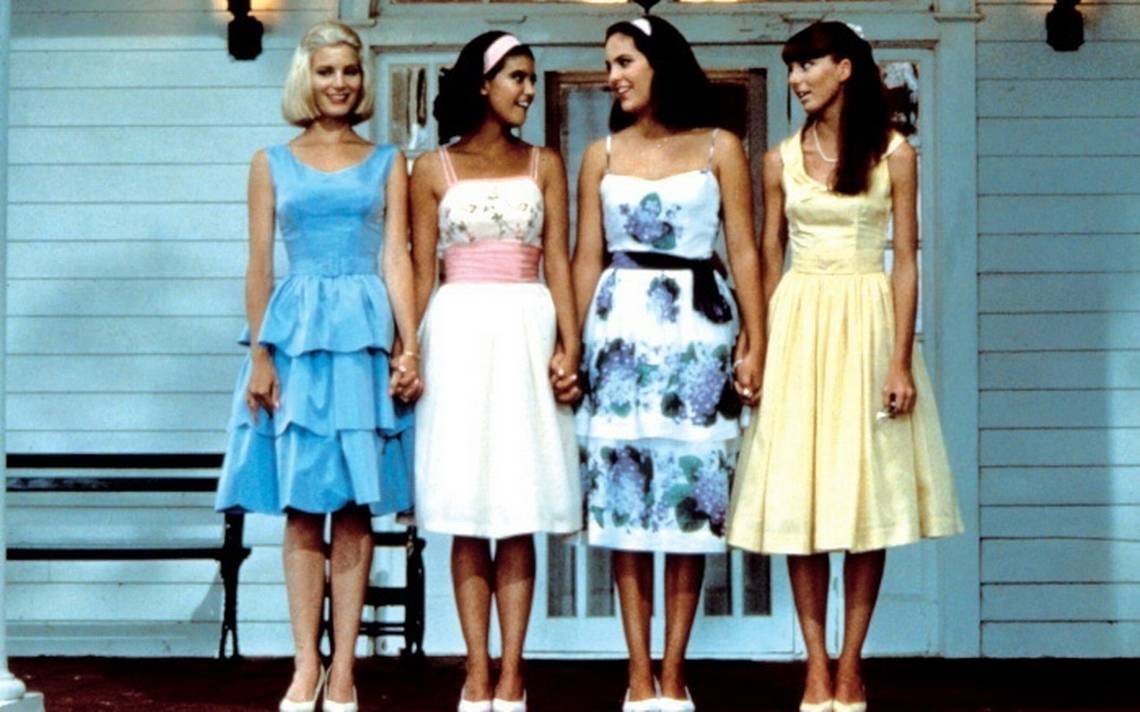
 My creativity has nourished and enlivened all vocations and avocations I’ve pursued in adulthood. Being imaginative has equipped me
  What more can you ask from a novel than lovable characters who live and breathe beyond the page? A young writer finding her voice, telling a story (fanfic) within a story, an innocent college freshman stumbling and fumbling into first love with a totally crush-worthy guy, and a twin carving out her own, independent identity while still honoring the sisterly bond forged through the crucible of childhood. Honestly, what’s not to love about Rainbow Rowell’s un-put-downable
  A prevailing theme that threads through my work and my writing is the concept of change and one’s ability to transform him or herself at any time or point in one’s life. It’s not surprising, really, when you consider that my name, Renée, literally means ‘reborn’ in French. Whether by necessity or by choice, I feel like I’m perennially giving birth to revised (and hopefully improved) versions of myself. I believe this drive comes not from an unrelenting disappointment with who I am and what I’ve accomplished; instead, it recognizes the seemingly unlimited potential for which I–and all of us–have the capacity.
 A week ago yesterday, my best friend gave me an early birthday surprise as a burst of inspiration to help me close out National Novel Writing Month. I was happily stunned by the email that informed me I was gifted a
  So from about age 8 on, I began writing and writing and writing. I wrote from my life experiences, my pure fantasies and from an imagination stoked and nurtured by reading the best books written for children and young adults at that time. I wrote when I was lonely. I wrote as an escape. I wrote when I was excited about what the future had in store for me. I wrote as another form of play and exploration. I wrote to exercise that mighty muscle of my imagination, which was just as important to me as my strong biceps and springy, speedy legs.
 Renée Can(ada) Writes